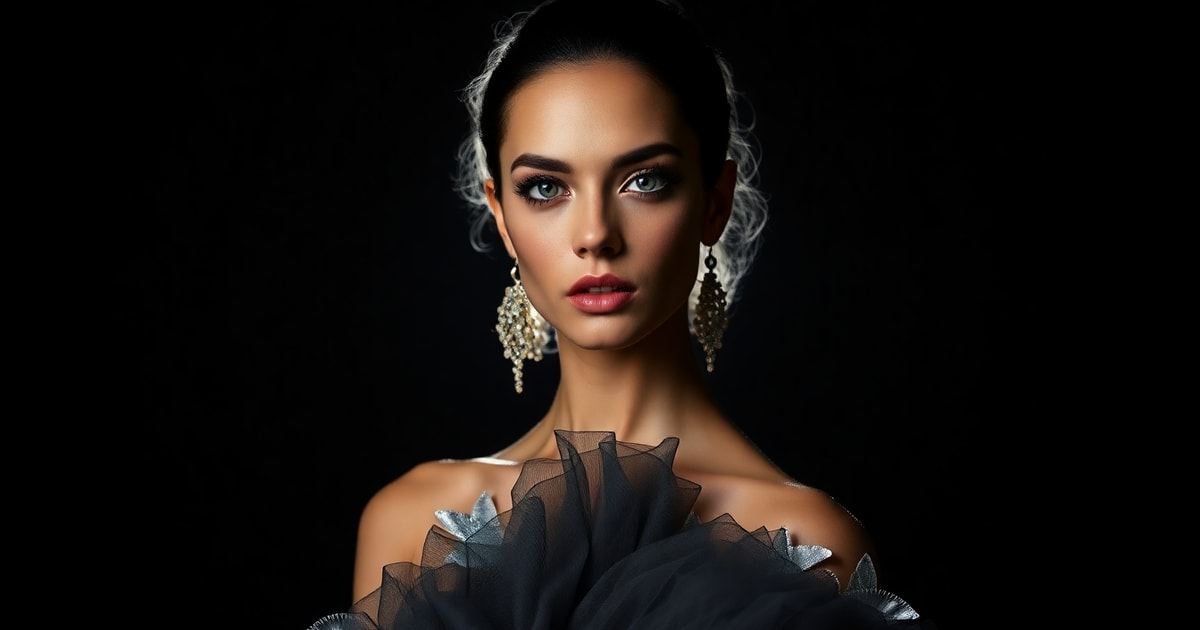
A model can arrive on set with perfect posture, a flawless look, and years of experience — and still disappear into the frame if the expression is not there. The camera reads everything: tension in the jaw, uncertainty in the eyes, a hand that does not know where to rest. Expression and body language are not secondary to the clothes; they are the engine of the entire image.
Photographers and creative directors talk about it constantly — the model who walks on set and immediately understands the mood. The one who shifts from editorial severity to commercial openness between looks without being told twice. That instinct can be trained, and training it is among the most valuable investments a working model can make.
Know What the Shoot Is Asking For
Before you pull a single pose, understand the creative brief. Editorial and commercial work require entirely different registers. Editorial calls for tension, abstraction, and emotional complexity — the kind of gaze that does not explain itself. Commercial work asks for warmth, accessibility, and approachability. Confuse the two and the client gets images they cannot use.
When you arrive on set, study the mood board if one is available. Listen to the music playing in the studio. Notice how the photographer is speaking. Every creative environment carries a temperature, and your job is to match it before the first frame is taken. Models who arrive ready — who have absorbed the concept before the shutter fires — are the ones who get rebooked.
Build Your Expression Vocabulary
There are five core moods every model should be able to summon at will: confident, relaxed, intense, playful, and editorial. These are not performed from the outside in — they are accessed from the inside out. Intense is not just narrowed eyes; it is the feeling of something mattering enormously. Relaxed is not blankness; it is ease with nowhere to go.
Practice in front of a mirror with purpose. Move through each mood slowly, noticing what happens to your jaw, your brow, the set of your lips, the angle of your chin. Record yourself and watch it back without sound — the body communicates far more than you realize when you stop listening to the words. Over time, build a personal library of what each expression looks like from multiple angles and under different light.
The best models do not just hold a look. They inhabit it — and the camera knows the difference every time.
Posture Is the Architecture, Expression Is the Interior
Strong expression has no credibility if the body beneath it is collapsed. Posture is the architecture. Lengthen your spine, drop your shoulders away from your ears, and engage your core with a quiet, sustained effort. Think of the crown of your head reaching upward while your tailbone grounds you down. This alignment is not rigid — it is alive, and it creates the structural foundation that allows every expression above it to read clearly.
From that foundation, work with angles. The body almost never photographs well when squared directly to camera. Turn slightly, shift your weight to the back foot, and let your hips find a gentle diagonal. A 45-degree angle slims the frame and gives the image spatial depth. Then layer the expression on top: the body says direction, the face says meaning.
Your Hands Tell Their Own Story
Hands are the detail that amateur models consistently neglect. A flat palm pressed against a hip reads as uncertain. Hands hanging loosely at the sides look unresolved. The solution is intention — your hands should always be doing something specific, however subtle. A light touch to the collarbone, a thumb hooked at a waistband, fingertips grazing a lapel. These small gestures create elegant leading lines and give the eye somewhere to travel through the image.
When in doubt, keep the hands soft. Avoid gripping or clenching. Think of your fingers as extensions of a calm nervous system — relaxed, deliberate, present. If you are holding a bag or an accessory, handle it as you naturally would in life. Forced handling looks forced on film.
Movement Makes Images Feel Alive
Static poses have their place, but movement is what makes an image feel inhabited rather than illustrated. A half-turn of the head, a step caught mid-stride, a hand lifting through the air — these introduce energy that no amount of perfect stillness can replicate. When a photographer says "give me something," that is not an invitation to try harder; it is an invitation to move.
Fabric is particularly responsive to motion. The cut of a coat, the drape of a gown, the weight of a structured suit — these reveal themselves when the body moves through space. Learn to work with the clothes rather than simply wearing them. A slight exaggeration of the stride, arms held just away from the torso, a turn of the wrist: each of these lets the garment perform alongside you.
Stay in Conversation With the Photographer
The creative relationship between model and photographer is a live negotiation. The photographer is watching the monitor in real time, seeing things the model cannot see: how the light falls, whether the energy reads, where the eye goes. Listen when they redirect you. If something is not working, they are not criticizing — they are problem-solving, and your receptiveness is part of the collaboration.
Between frames, breathe. Release the tension from your face and shoulders, take a full breath, and reset. Tension accumulates subtly during a long shoot and begins to appear in the work before the model realizes it is there. The breath is both the reset and the delivery mechanism — exhale before the frame, and the body settles into something more genuine.
Expression and body language are not decorative skills. They are the core of the craft. A model who can read a brief, access a genuine emotional register, manage the architecture of the body, and stay in creative dialogue with the team is not just bookable — they are indispensable.