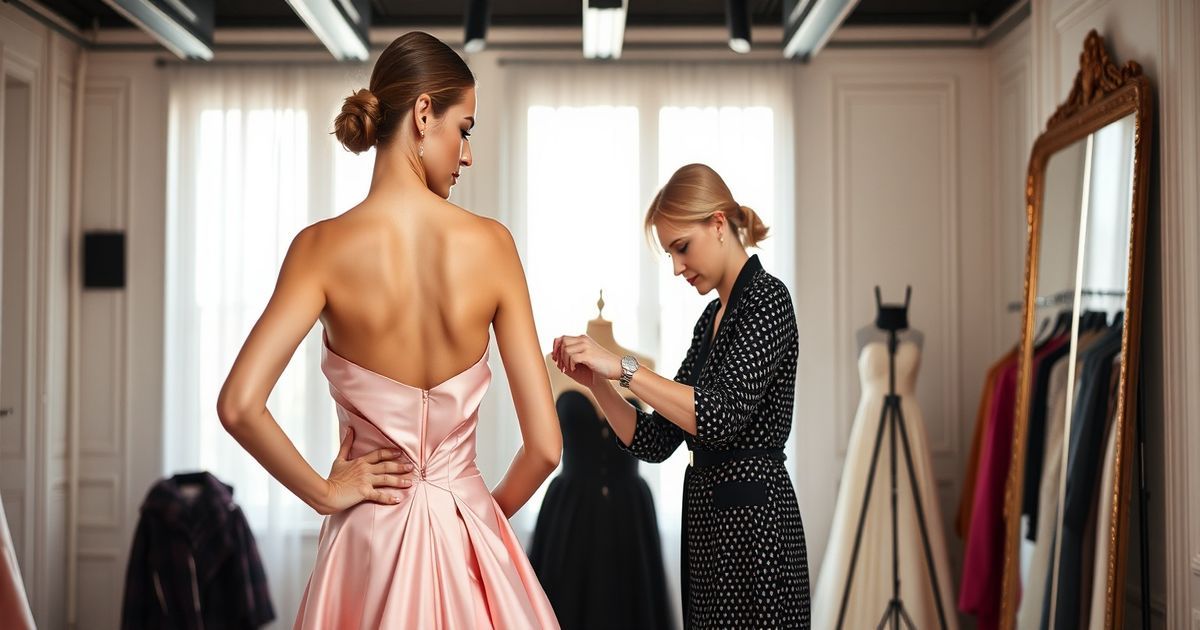
A fitting appointment may last forty-five minutes. Yet the impression it leaves can determine whether a designer requests you for their next collection, their season after that, and the one that follows. In the modeling industry, fittings are far more than a routine measurement check — they are an active audition for a professional working relationship. How you conduct yourself in those forty-five minutes speaks directly to your reliability, your physical preparedness, and your understanding of the craft.
Whether you are preparing for your first major fitting or refining the habits that will carry you through a full fashion week schedule, the principles below will help you walk in with confidence and leave the room a designer's first choice.
Arrive Prepared — and On Time
Punctuality in the modeling industry is non-negotiable, but for fittings it carries particular weight. Design teams schedule their day around model availability. Arriving even ten minutes late can compress alterations, disrupt the stylist's workflow, and signal a lack of respect for the creative process. If traffic or a transportation issue threatens your arrival time, contact your agency immediately so they can communicate with the client on your behalf. Never simply show up late without warning.
Beyond timing, your physical state on arrival matters. Come to a fitting freshly showered and free of heavy fragrance. Perfume and cologne can transfer to delicate fabric — an expensive inconvenience for any designer. Arrive with your hair styled away from your face and neck so garments can be pulled on cleanly. Keep your nails in neutral tones or bare; colored polish photographed alongside white couture samples is a common source of frustration in fitting rooms.
Wear the Right Foundation
The single most practical step you can take before a fitting is to wear appropriate undergarments. Bring seamless nude underwear and a strapless or convertible bra if the garments call for it. Many designers will specify what they expect — if yours does not, default to minimal, skin-toned base pieces that will not distort the lines of the garment or show through sheer fabric.
Avoid shapewear that alters your natural measurements. A fitting is calibrated to your actual body. Arriving in compression pieces creates an inaccurate fit that wastes the team's time and produces alterations that will not translate correctly to show day. Wear what you will realistically wear on set or on the runway.
Move When Asked — and Only When Asked
A fitter's job requires stillness. When pins are being placed, when chalk marks are being drawn, when seams are being assessed — stand still, breathe normally, and resist the impulse to fidget. Small movements during this stage can lead to misfitting seams and, at worst, a needle injury.
When the design team asks you to move — to walk a few steps, to raise your arms, to turn and face the mirror — do so with your full runway presence. Fittings are an opportunity for designers to see how a garment behaves in motion, not just at rest. Show them what the piece will look like when it has intention behind it. A brief walk across the fitting room with the same quality of movement you would bring to a catwalk tells a designer far more than a static pose ever could.
Communicate Clearly and Professionally
If something feels uncomfortable — a seam pulling too tightly, a neckline that restricts movement, a heel height that affects your walk — say so clearly and calmly. Designers need accurate feedback to produce wearable, performable garments. Suffering in silence and then struggling on show day helps no one.
Describe what you feel, not what you think the solution should be. "The shoulder seam pulls when I raise my arms" is useful information. "You should move the seam two centimetres back" is not your decision to make.
Keep your observations concise and practical. The fitting room is a collaborative workspace, and your role within it is to provide accurate physical feedback and a professional presence — not to weigh in on design choices. Trust the creative team's vision and offer information where it genuinely affects wearability.
Respect the Garment
High fashion samples are often one-of-a-kind pieces. Handle them with corresponding care. Never eat or drink while wearing a garment. Keep your make-up light or absent when trying on light-coloured pieces. If you need to apply deodorant, use a clear formulation and allow it to dry fully before dressing.
When removing a garment, wait for assistance unless the design team instructs you to undress independently. Rushing to pull a pinned piece over your head can dislodge hours of hand-stitching in an instant. Patience in these moments is a mark of professionalism that experienced designers notice and remember.
Follow Up Through Your Agency
After the fitting, your agency is your communication channel for any follow-up. If you have notes about the garment that arose after you left the room — a detail about how the waistband sat when you sat down, a question about shoe height — relay those through your booker rather than contacting the design team directly. It keeps communication organised and reinforces the professional structure that clients rely on.
A fitting appointment is a brief window, but the professional habits you demonstrate within it have a long reach. Designers and creative directors talk. A model who arrives prepared, communicates clearly, handles garments with care, and brings genuine presence to the process builds a reputation that travels well beyond any single booking.