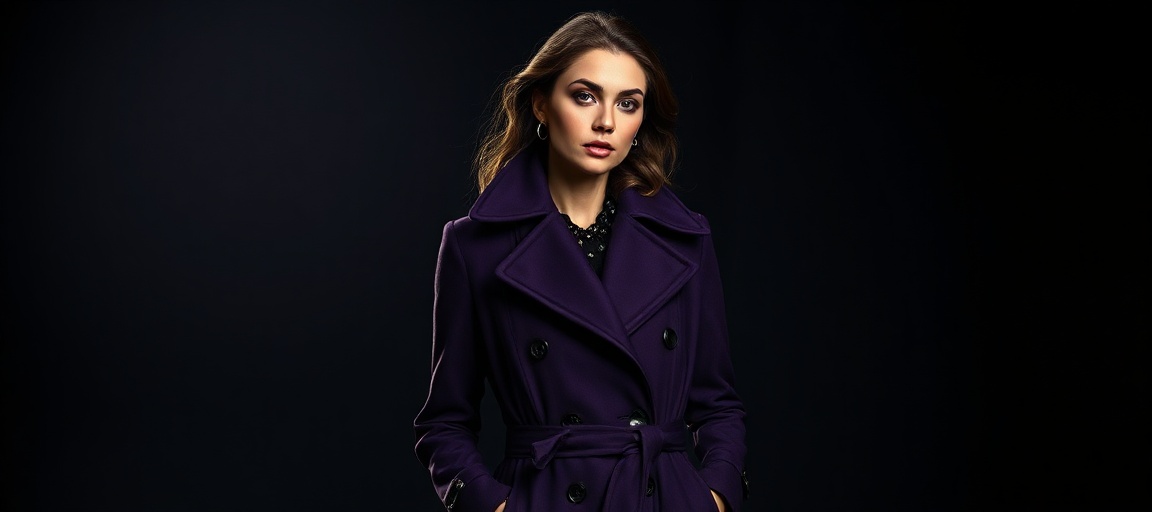
The Fall/Winter 2026 collections are in. From New York and London to Milan and Paris, the season's runways delivered a unified message: fashion is done with restraint. This is a season of deliberate drama — of regal colour, gothic silhouette, and surface textures that demand to be touched. For working models, understanding the creative language behind these trends is not a luxury; it is a professional necessity. Every casting brief you receive this autumn will draw on some version of what the runways proposed. Here is what you need to know.
Regal Purple Takes the Season
If there is a single colour that defined FW26, it is a deep, saturated purple — worn head to toe, without apology. At Celine, a purple leather trench coat anchored an otherwise stripped-back look. At Mugler, even the accessories matched, completing a monochromatic gabardine skirt suit in the same commanding hue. Chloé, Loewe, and Ferragamo each put their own signature on the shade.
For models, carrying a monochromatic look requires a particular kind of stillness. When the clothes are this unified, the eye travels to posture, to the quality of the walk, to the expression. There is nowhere to hide — and that is precisely the point. Understand the weight and formality of the colour. Purple carries historical resonance; the way you walk in it should acknowledge that authority.
The Return of the Skirt Suit
The skirt suit was the dominant tailoring story of the season, appearing at Jil Sander in a sleek lapel-less cut, at Ferragamo in deconstructed separates, and at Haider Ackermann's Tom Ford in suede versions rendered in poppy red and ecru. Saint Laurent and Gucci brought the slim-cut suit back to sharp relevance, while the broader tailoring conversation shifted decisively away from oversize menswear silhouettes toward precision and fit.
What this means practically: castings for autumn campaigns will place renewed emphasis on how a model wears tailoring. The shoulders must sit cleanly. The walk should be controlled and measured — not stiff, but considered. If your runway repertoire leans heavily toward fluid or casual movement, now is a good time to revisit the disciplined technique that structured suiting rewards.
Gothic Romance and Sculptural Volume
The season's most talked-about collections leaned into darkness and drama. At Saint Laurent, Anthony Vaccarello closed with a finale of black lace pannier gowns that felt genuinely theatrical. Sean McGirr at McQueen blended Regency-era silhouettes with a subversive edge. Ann Demeulemeester offered silk and chiffon bodice dresses with asymmetric hems and high necklines that evoked nineteenth-century mourning wear reborn as something vital and modern.
Volume appeared everywhere — structured peplums, bustles, exaggerated hip skirts, and big feather-effect shoulders at McQueen, piles of stacked ruffles at Dior. Working in these pieces calls for a specific physical awareness. Volume changes how the body reads from a distance; you need to lead with your centre and let the garment breathe around you, rather than fighting its structure. Overshooting the movement kills the silhouette.
"The runway lasts ninety seconds. The photograph lasts forever. Know the difference between dressing a garment and embodying it."
Texture, Fur, and the Case for Tactile Fashion
Louise Trotter's sophomore Bottega Veneta collection was a masterclass in surface: fur, pile, shearling, and fringe layered with the kind of considered abundance that makes you want to reach out and touch the screen. At Chanel, Matthieu Blazy offered sequin pieces that read like scales, alongside floral appliqué. Louis Vuitton and Gucci leaned into belted fur coats, while Valentino's Alessandro Michele presented versions that felt genuinely heirloom — as though borrowed from a very well-dressed great-aunt.
Texture-heavy garments carry weight, literal and figurative. They move differently, respond to light differently, and require a model who understands stillness as much as motion. The great images from this season's campaigns will likely be the ones where the model is not competing with the garment but completing it.
Plaid, Tartan, and the Craft Narrative
Checkerboard and tartan prints ran through the season like a thread — most beautifully at Chloé, where Chemena Kamali built an entire collection around check prints, from structured button-downs to translucent shirred tea dresses. Elsewhere, designers at Dior and Valentino made a wider argument for investment-quality craft: rich brocade, intricate embroidery, and beaded detailing that positioned each piece as something meant to last beyond the season.
For models working editorial briefs this autumn, understanding the heirloom and craft narratives behind these pieces will sharpen your instinct in the studio. When a garment carries that kind of intention, the image it wants is quieter, more grounded — something that holds up to being looked at for a very long time.
What to Take Into Booking Season
FW26 is a season that rewards technical command. The casting briefs you encounter over the coming months will call for models who can carry structured tailoring with authority, navigate extreme volume without losing the line, and bring an inner stillness to drama-heavy garments that might otherwise wear the model rather than the other way around. Know the references. Study the collections. Walk into every go-see with a clear understanding of what this season is asking for — and be the person who can deliver it.