A finished fashion campaign looks effortless. The image lands on a billboard or a magazine spread, and the world sees a single, polished moment: perfect light, perfect expression, perfect garment. What the world does not see is the intricate machine that produced it — a collaboration involving dozens of professionals, weeks of preparation, and hundreds of decisions made before a single frame is captured.
For models, understanding that machine is not merely interesting; it is professionally essential. The talent who walks onto set knowing where they fit in the production hierarchy, what each role demands, and what is expected of them at every phase will always outperform those who treat the shoot as a series of poses in front of a camera. Here is a complete look at how a fashion campaign is built, from the first creative conversation to the final retouched file.
Phase One: The Creative Brief
Every campaign begins with a brief — a document that defines the brand's objectives, intended audience, visual language, and deliverables. The brief is owned by the client (a fashion house, a retailer, or a fragrance label) and is handed to either an in-house creative team or an external agency. It answers questions that everything else must serve: What is this campaign selling? Who is it speaking to? What emotion should it leave behind?
From the brief, a creative director develops a concept. This is where the visual metaphors are chosen, the mood board assembled, and the overall aesthetic locked. Every subsequent hire — the photographer, the stylist, the hair and makeup team, the model — is selected in service of that concept. By the time casting begins, the creative vision is already fully formed.
The model is not the starting point of a fashion campaign. The concept is. Understanding this shifts how you read every brief, every call sheet, and every set instruction you receive.
Phase Two: Casting
Casting translates the creative brief into human terms. The casting director works from a detailed profile: height range, coloring, movement quality, specific energy, prior work that aligns with the brand's aesthetic. Agencies like Pelageo submit relevant talent based on that profile, and a round of go-sees or digital submissions follows.
What casting directors are evaluating goes well beyond appearance. They are assessing whether a model can embody the concept — whether their physical presence, their range, and their professional reputation align with where the brand wants to be seen. A campaign for a minimalist Scandinavian label is looking for something fundamentally different from one for a maximalist Italian house, even if both require similar physical measurements.
For models, the lesson here is that rejection at the casting stage is almost never personal. You are either right for the concept or you are not. Booking the job means you were the concept — an important reminder to bring that same clarity and specificity to set.
Phase Three: Pre-Production
Once talent is confirmed, the production team moves into a dense pre-production phase. Location scouts secure the setting — a studio, an architectural landmark, an outdoor landscape — and technical crews begin planning the lighting setup. The stylist sources and fits the garments, working with the creative director to build looks that tell the campaign story across multiple images.
The model's involvement during pre-production is typically limited to a fitting appointment and, occasionally, a hair and makeup test. Both deserve full professional engagement. The fitting is where the stylist sees how the garments move and drape on the model's specific body, and adjustments are made accordingly. Arriving in neutral, fitted undergarments, maintaining consistent measurements, and communicating clearly about any comfort issues are not small courtesies — they directly affect the quality of the final images.
Phase Four: Shoot Day
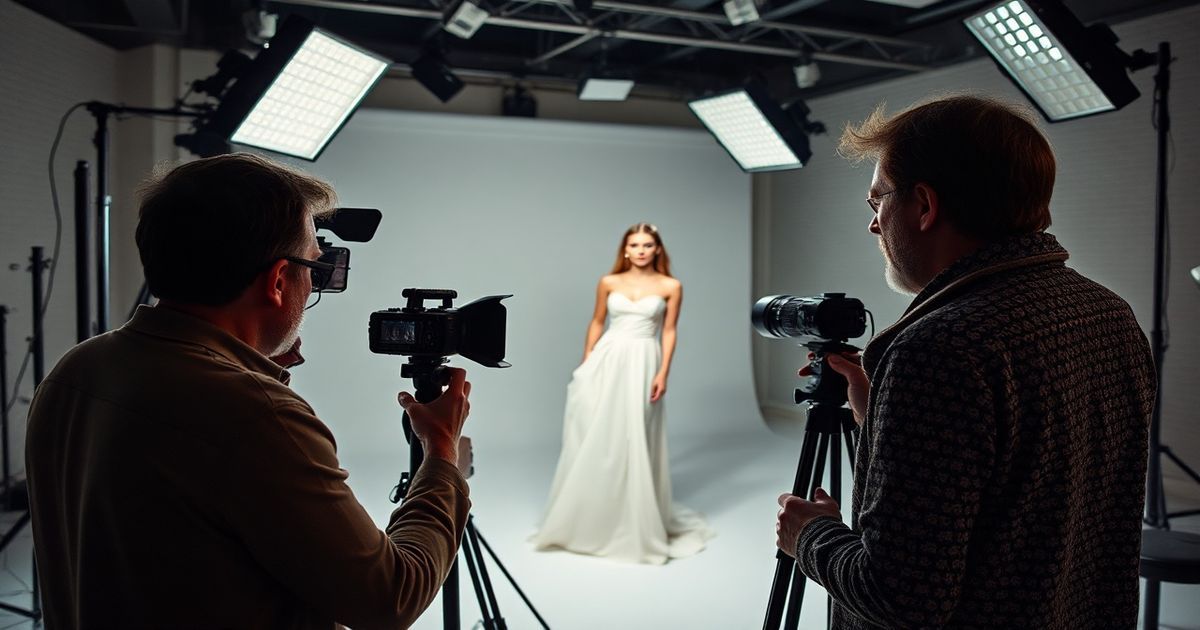
On the day of the shoot, the studio or location becomes a choreographed environment. The call sheet governs the schedule: who is called at what time, in what order looks are shot, and how long each setup is expected to take. Respecting the call sheet is one of the most valued qualities a model can bring to a production.
The hierarchy on set is clear. The photographer directs the model in close collaboration with the creative director. The stylist manages garments between setups. The hair and makeup team is on standby throughout. The producer manages time and logistics. Each of these roles is deeply skilled, and the most effective talent learns to absorb direction quickly, translate it into physical expression, and offer variations without prompting.
Between setups, a working model is not passive. They are memorizing directions, reviewing Polaroids or monitor previews with the team, and conserving energy while remaining fully present. The camera records physical reality with unforgiving precision; tension in the jaw, distraction behind the eyes, and discomfort in the posture all appear in the frame. A technically proficient model understands that the physical work of posing and the mental work of staying in the concept are one and the same task.
Phase Five: Post-Production
After the shoot wraps, the images move into post-production — a phase entirely outside the model's involvement but worth understanding. The photographer delivers an edit of selects, typically hundreds of frames narrowed from thousands. A retoucher then works on the chosen finals, adjusting color grading, removing distractions, and refining the images to match the creative vision established in the brief.
The final campaign images may look substantially different from what appeared on the monitor during the shoot. Lighting can shift dramatically in post, skin tones are graded to match the brand palette, and backgrounds may be altered or composited. This is not a commentary on the model's performance — it is the nature of the medium. Professional talent understands this distinction and does not conflate the post-production result with an evaluation of their work on set.
What This Means for Your Career
Models who understand the full campaign production process are more valuable to every team they join. They arrive having internalized the brief. They engage with fittings and tests with genuine attention. They read the room on set — knowing when to take initiative and when to follow direction precisely. They respect the time pressures that govern every hour of a production budget.
The fashion campaign is a collaborative act. The image that reaches the world carries the work of a creative director, a photographer, a stylist, a hair and makeup artist, a producer, and the model. Your contribution is specific and irreplaceable — but it is one thread in a larger cloth. Wear it well.