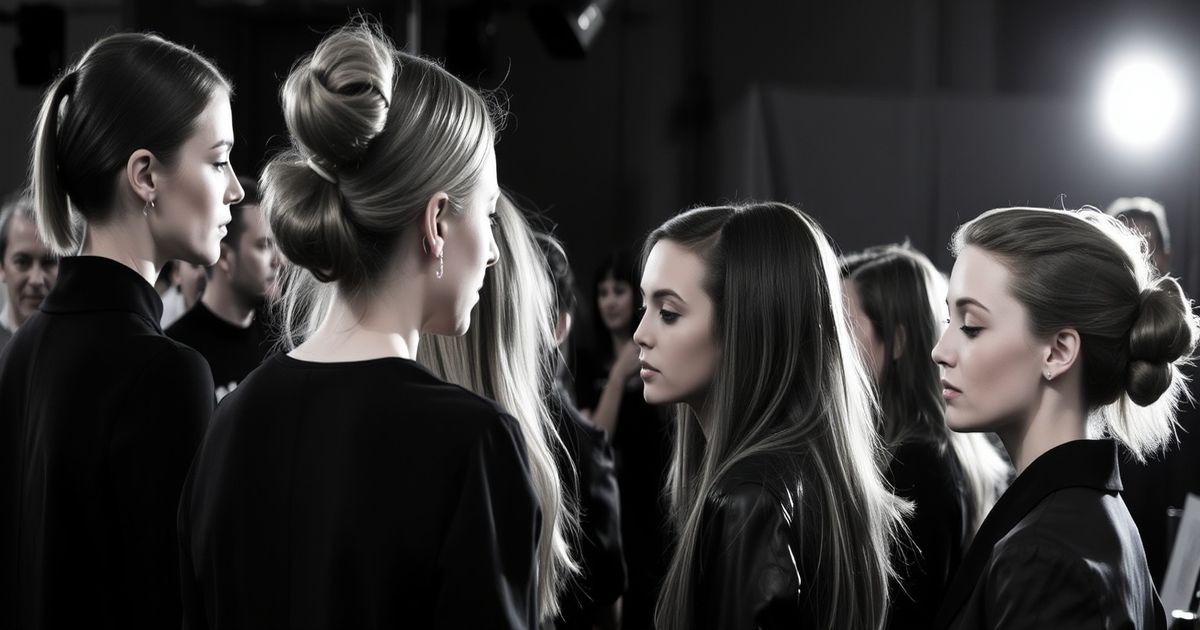
From the front row, a fashion show appears effortless. Models glide down the runway in immaculate garments, music pulses through the venue, and in twelve minutes the collection is revealed. What the audience never sees is the extraordinary machinery that makes those twelve minutes possible: months of planning, weeks of castings, days of fittings, and hours of controlled chaos backstage. Here is what really happens behind the curtain at a major Fashion Week.
Weeks Before: The Casting Marathon
Fashion Week preparation begins long before anyone sets foot in a venue. For models, the process starts with casting season, an intense period typically spanning two to three weeks before the shows begin. During this time, agencies submit digitals and portfolios to dozens of design houses, and models attend back-to-back casting calls that can stretch from early morning until evening.
A single casting day might involve visiting eight to twelve different designers across a city. Models arrive, present their portfolio books, walk for the casting director, and often try on sample garments. The entire interaction may last less than five minutes. Decisions are swift, sometimes made on the spot, more often communicated through agencies hours or days later.
The competition is formidable. For a single show, a designer might see three hundred models and select thirty. The selections are based on a complex matrix of factors: the model's walk, physical proportions relative to sample sizes, overall aesthetic alignment with the collection, and sometimes the model's existing relationship with the brand.
Days Before: Fittings and Lineup
Once a model is confirmed for a show, the fitting process begins. Fittings typically take place one to three days before the event. During a fitting, the model tries on her assigned looks while the designer, stylist, and tailoring team assess the garment's fit, determine any necessary alterations, and finalize the accessories, shoes, and styling details that will complete each look.
A fitting is where the collection comes alive on a human body for the first time. It is often the moment when a designer sees months of sketches and fabric work become something real and wearable.
The lineup, the specific order in which models will walk and the looks they will wear, is typically finalized during or immediately after fittings. Opening and closing a show are positions of particular prestige, and these slots are carefully considered by the designer and their team. The lineup also accounts for practical logistics: quick-change requirements, the visual flow of the collection from look to look, and the pacing of the presentation.
Show Day: The Early Call
On show day, models receive a call time that usually falls three to five hours before the show begins. For a major evening presentation, this might mean arriving backstage at two or three in the afternoon. For morning shows, call times can be as early as five or six in the morning.
Upon arrival, models check in with the production team and are immediately directed to hair and makeup stations. The backstage area of a Fashion Week show resembles a highly organized field hospital: rows of lit mirrors, styling chairs, product stations, and teams of specialists working with precision and speed.
Hair and Makeup: The Transformation
Hair and makeup teams at Fashion Week are among the most skilled professionals in the beauty industry. Lead artists, often celebrity hairstylists and makeup artists, create the overall vision for the show's beauty look. They then brief and supervise teams of assistants who execute the look across all models in the lineup.
A single beauty look might take anywhere from forty-five minutes to two hours per model, depending on its complexity. During this time, models sit patiently, often reading, scrolling their phones, or catching brief naps. Experienced models know to arrive with clean, product-free hair and minimal skin care, providing a blank canvas for the beauty team.
The atmosphere during hair and makeup is typically calm and focused, a stark contrast to the energy that will build as showtime approaches. This is often the quietest period of the day, and many models use it as a moment of mental preparation.
Dressers and the Quick-Change Ballet
Each model is assigned a dresser, sometimes two, whose job is to ensure the model gets in and out of each look flawlessly and on time. Dressers are unsung heroes of Fashion Week. They organize garments on labeled racks, lay out accessories in precise order, and rehearse the sequence of each outfit change.
Quick changes are among the most intense moments of any show. A model may have less than ninety seconds between her exit from the runway and her next entrance, during which she must fully change garments, shoes, and accessories. Dressers work with surgical efficiency: unzipping, pulling, fastening, adjusting, all while the model maintains composure and focus. A single fumbled zipper or missing accessory can throw off the entire show's timing.
The Walk: Twelve Minutes of Intensity
When the music begins and the first model steps onto the runway, weeks of preparation converge into a single, concentrated performance. The walk itself is a study in controlled confidence. Each model must project the mood of the collection while maintaining precise timing, spatial awareness, and physical poise under extraordinary scrutiny.
The standard runway walk covers roughly fifty to eighty meters, depending on the venue. Models typically have fifteen to twenty seconds on the runway per look, including the turn at the end. During those seconds, hundreds of cameras fire continuously, editors evaluate, buyers assess, and the designer watches from backstage monitors with the acute attention of a conductor during a symphony performance.
Between exits and entrances, models navigate the backstage corridor, a narrow, often crowded pathway that connects the runway to the dressing area. The energy here is electric: dressers move at speed, production assistants call out lineup positions, and models transition between looks with practiced efficiency.
The Grueling Schedule
A single show is demanding enough, but Fashion Week asks models to repeat this process multiple times per day across an entire week. During peak Fashion Week seasons, a model booked for several shows might walk three to five runways in a single day, with fittings and castings for upcoming shows squeezed in between.
- Morning call time for the first show might be five in the morning.
- Multiple shows throughout the day require travel across the city between venues, often with no time for proper meals.
- Evening shows and presentations can extend the working day past midnight.
- Fittings for the next day's shows may happen after the last show concludes.
This schedule repeats for approximately one week in each fashion capital. Models who walk the full circuit, New York, London, Milan, and Paris, sustain this intensity for nearly a month straight. Physical stamina, disciplined nutrition, and the ability to sleep whenever opportunity allows are essential survival skills.
After the Final Walk: Networking and Recovery
After the shows, the social dimension of Fashion Week begins. After-parties, dinners, and networking events provide opportunities to connect with designers, editors, stylists, and fellow models in a more relaxed setting. These interactions, while seemingly social, are often where professional relationships are deepened and future bookings are seeded.
However, experienced models know the importance of selective attendance. Attending every event leads to exhaustion that compromises performance in the shows that remain. The wisest approach is strategic: attend events hosted by brands you have worked with or want to work with, make meaningful connections, and then prioritize rest.
Fashion Week is among the most demanding and exhilarating experiences in a model's career. Understanding what happens behind the scenes prepares you not just to survive it, but to thrive within its extraordinary demands. The models who return season after season are those who master the logistics, protect their energy, and never lose sight of the privilege it is to walk for the world's most celebrated designers.