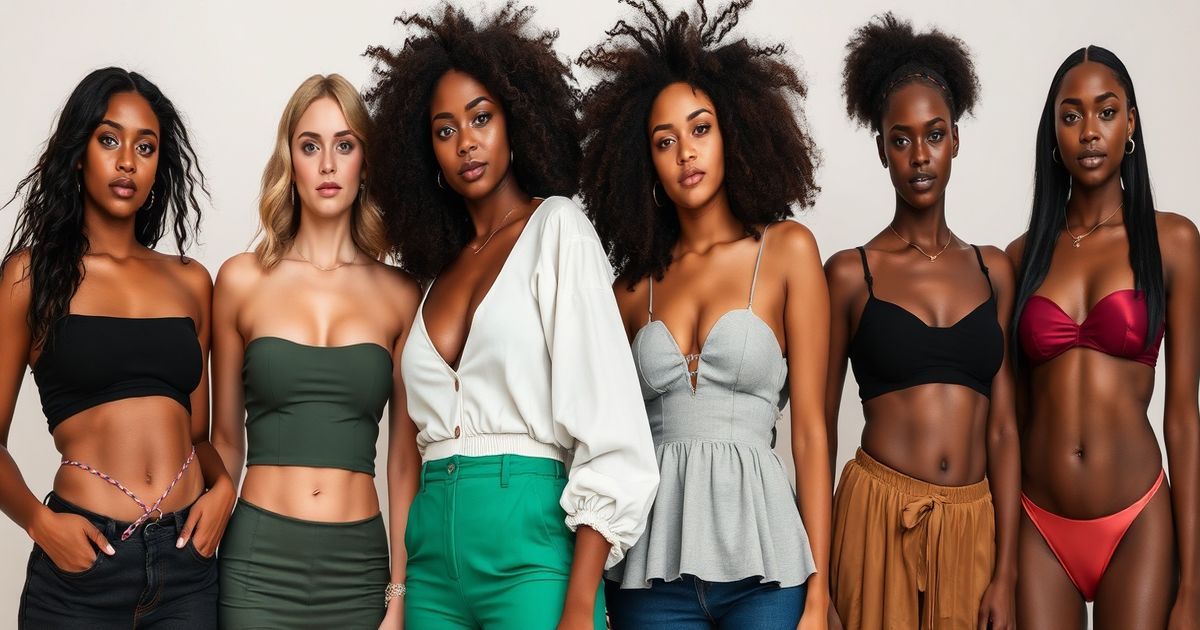
For most of its modern history, the modeling industry operated within remarkably narrow definitions of beauty. Height, weight, age, skin color, and physical ability were filtered through standards so rigid that the vast majority of the world's population could never see themselves reflected on magazine covers or runways. That era is ending. A profound shift toward inclusivity is redefining who gets to be seen, celebrated, and represented in fashion.
A Brief Historical Context
The fashion industry's relationship with diversity has been complicated and often contradictory. While individual models of color, such as Donyale Luna in the 1960s and Iman in the 1970s, broke significant ground, they remained exceptions in an overwhelmingly homogeneous industry. For decades, the "ideal" model was defined by an extremely narrow set of physical parameters: typically young, white, tall, and very thin.
The consequences of this narrow vision extended far beyond the industry itself. Fashion's visual language influences how entire cultures perceive beauty, aspiration, and self-worth. When only one body type and one complexion dominate the imagery that surrounds us, the psychological impact on those who fall outside that standard is real and measurable.
The shift began slowly, driven by a combination of consumer activism, social media democratization, and a new generation of designers and editors who recognized that fashion's relevance depended on its willingness to evolve.
Size-Inclusive Modeling
Perhaps the most visible frontier of inclusive modeling has been the expansion beyond traditional sample sizes. The rise of size-inclusive modeling, once marginalized under the limiting label of "plus-size," has transformed casting sheets, advertising campaigns, and runway lineups across the industry.
Pioneering models have demonstrated that beauty, elegance, and commercial appeal exist across the full spectrum of body types. Their success has not been merely symbolic. The size-inclusive fashion market represents billions of dollars in annual revenue, and brands that have embraced this reality have been rewarded with customer loyalty and commercial growth.
Inclusivity is not charity. It is recognition that beauty has always been diverse. The industry is not creating something new; it is finally acknowledging what has always been true.
Major fashion weeks now regularly feature models of all sizes alongside their straight-size counterparts, not as token gestures, but as integrated elements of collections designed to dress real people. This normalization, rather than segregation, marks the most significant progress in the movement.
Age Diversity on the Runway
The fashion industry has long been youth-obsessed, with most models beginning their careers in their mid-teens and facing diminishing opportunities by their late twenties. This paradigm is being challenged by a growing appreciation for age diversity in fashion representation.
Models in their fifties, sixties, and seventies are securing major campaigns with luxury brands, gracing magazine covers, and walking international runways. Their presence communicates a powerful message: style, confidence, and beauty are not the exclusive domain of youth. These models bring a depth of presence and self-assurance that resonates strongly with consumers across all age groups.
For agencies, representing models across a broader age range is both a moral and commercial imperative. As the global population ages and spending power shifts toward older demographics, brands need talent that speaks authentically to these audiences.
Disability Representation
One of the most transformative developments in inclusive modeling is the increasing visibility of models with disabilities. Models who use wheelchairs, models with prosthetic limbs, models with Down syndrome, and models with visible physical differences are appearing in campaigns for mainstream brands with growing frequency.
This representation matters profoundly. For consumers with disabilities, seeing themselves reflected in fashion imagery affirms their belonging in spaces that have historically excluded them. For the industry, it broadens the visual vocabulary of beauty and challenges assumptions about who can embody style and desirability.
Adaptive fashion, clothing designed specifically for ease of wear by people with various physical needs, has emerged as a growing market segment. Major retailers have launched adaptive lines, and they need models who can authentically represent these products. This creates professional opportunities that did not exist even a few years ago.
Cultural and Ethnic Diversity
The push for greater cultural and ethnic diversity in modeling has produced measurable results, though significant work remains. Fashion weeks in recent years have shown marked increases in the percentage of models of color on runways. Magazine covers have become noticeably more diverse, and advertising campaigns increasingly reflect the multicultural reality of global consumer markets.
However, representation must extend beyond mere visibility. The industry must also address the systems and structures that have historically disadvantaged models from underrepresented backgrounds, including unequal pay, limited access to premium bookings, and insufficient support from agencies unfamiliar with diverse hair textures, skin tones, and cultural considerations.
Brands Leading the Charge
Several brands have distinguished themselves as genuine leaders in inclusive casting and representation. These companies have moved beyond occasional gestures to embed diversity into their core brand identity and operational practices.
- Savage X Fenty has set a new standard for size, age, and ethnic diversity in lingerie campaigns and fashion shows, fundamentally altering consumer expectations in the category.
- Gucci has committed to diversity across its campaigns and runway presentations, working with models who represent a broad spectrum of backgrounds and identities.
- Nike has consistently featured athletes and models with disabilities in its advertising, normalizing diverse bodies in athletic wear.
- Chromat has built its entire brand identity around inclusive design and casting, featuring models of all sizes, genders, and abilities on every runway.
How Agencies Are Adapting
Model agencies are restructuring to meet the demand for diverse talent. Many agencies have expanded their boards to include dedicated divisions for size-inclusive models, mature models, and models with disabilities. Others have eliminated separate divisions entirely, integrating all talent into unified rosters that reflect the full range of human appearance.
Scouting practices are also evolving. Agencies are looking beyond traditional scouting grounds and methods, using social media, open casting calls, and community partnerships to discover talent from backgrounds that the industry has historically overlooked.
The Commercial Case for Diversity
Beyond the ethical argument, inclusive modeling makes strong commercial sense. Research consistently demonstrates that consumers respond more positively to advertising that reflects diversity. Campaigns featuring diverse models generate higher engagement on social media, stronger brand affinity among younger consumers, and broader market appeal. Brands seeking inclusive talent can book talent through agencies committed to diverse representation.
Brands that embrace inclusivity are not sacrificing commercial performance for social responsibility. They are enhancing both simultaneously. This alignment of values and value is what makes the current shift toward inclusivity sustainable and irreversible.
Remaining Challenges
Despite significant progress, the work is far from complete. Tokenism remains a risk, with some brands casting one or two diverse models for optics without addressing deeper structural inequities. Pay disparities between models of different backgrounds persist in many corners of the industry. And the definition of "inclusive" continues to expand, rightly, to encompass gender identity, religious expression, and other dimensions of human diversity that fashion has yet to fully embrace.
The rise of inclusive modeling is not a trend to be observed and forgotten. It is a fundamental evolution of the industry, driven by changing consumer values, demographic realities, and a growing recognition that fashion's power lies in its ability to make everyone feel seen. For aspiring and working models alike, this evolution represents both an opportunity and a responsibility to help build an industry worthy of the diversity it claims to celebrate. If you are ready to be part of this change, apply now to join an agency that values authentic representation.